The impact of 3D printing spans across industries, promising a future filled with groundbreaking advancements.
In the medical field, it revolutionized prosthetics, organ transplants, and drug development. For rare and vintage car aficionados, 3D printing streamlines restoration and preserves automotive heritage. Philanthropic organizations like Habitat for Humanity are even utilizing 3D printing to build homes swiftly to combat the housing crisis.
There’s no denying the benefits that 3D printing brings to the world, but not all 3D printing technology is equal.
There are a variety of distinctions that can impact the quality, efficiency, and versatility of each project. Understanding these nuances is vitally important for businesses and amateurs as they can, quite literally, make or break the project.
Understanding the Basics
Before diving into the subtleties, let’s recap the fundamentals of 3D printing technology. Also known as additive manufacturing, the 3D printing process builds objects layer by layer. This process is different from traditional manufacturing methods, where material is removed from a solid block to create the desired shape.
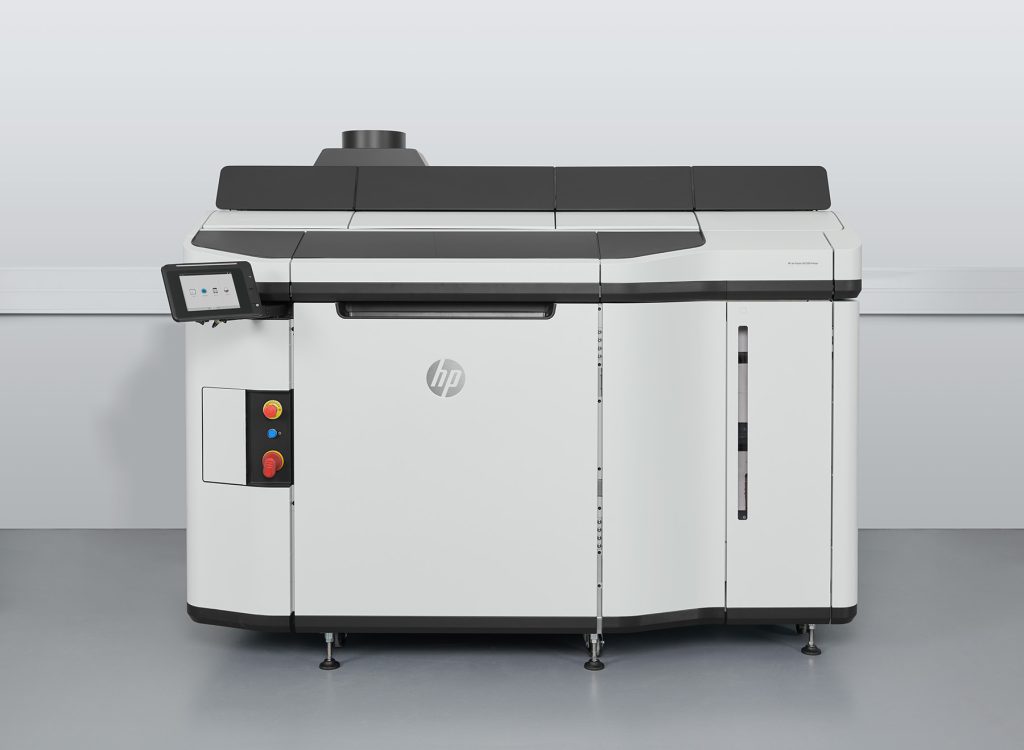
ABCorp 3D utilizes the latest generation of HP Multi-Jet Fusion technology, combined with a diverse range of printing materials, to bring our clients’ projects to life.
Multi-Jet Fusion (MJF)
Multi-Jet Fusion, or MJF, is an industrial 3D printing technology developed by HP. It provides exceptional precision, speed, and versatility for creating functional parts that are suitable for end-use. The technology’s high production speed allows for the printing of multiple parts simultaneously at high speeds, making it an excellent tool for prototyping.
MJF uses a layer of material powder (for example, Nylon PA12) as the part’s base. A thin layer of powdered material is laid on the part bed, followed by two agents (one for detailing and one for fusing), that are then melted by infrared light. From there, a detailed object is produced.
Binder Jetting
Binder jetting is a different additive manufacturing process where thin layers of a powdered material are carefully and selectively applied to a powder bed. They are then bonded with a single liquid bonding agent. The powder fuses together, solidifies, and repeats layer after layer. A benefit to binder jetting is that it is a zero-waste process. Unused powder is reused for future builds, making this technology more environmentally friendly.
The Importance of Equipment Variation
MJF and Binder Jetting are not synonymous with one another. They differ in terms of materials, capabilities, and applications that need to be taken into consideration before starting a project.
Binder Jetting uses a single binding agent, similar to an adhesive or glue, jetted onto the material to consolidate the layers of powder. Compare this to MJF which uses two agents. The first is a fusing agent, responsible for setting where the material will fuse, and the second is a detailing agent that marks the edges of the 3D printed part with laser level precision. Together, they comprise the fusing process.
MJF offers a superior surface finish, making it ideal for high-precision applications. Binder Jetting is capable of producing more detailed parts, but may have slightly rougher surface finishes that can affect the finished product.
MJF is an ideal choice for prototyping due to its high-speed printing and production capabilities, whereas Binder Jetting is a bit slower. However, Binder Jetting is zero-waste making it more cost-effective for large-scale projects.
Visit the HP website to learn more.
Choosing the Right Equipment
Selecting the right 3D printing process requires careful consideration of budget, desired print quality, and production volume. Once the preliminary requirements are decided, your team can compare various 3D printing technologies, equipment, and materials to bring your vision to life. Next is to consider the long-term costs of the project. This should include the initial purchase price plus the ongoing costs for materials, maintenance, and upgrades. Lastly, it can be worthwhile to consult industry experts or 3D printing service bureaus like ABCorp 3D to gain additional insight and recommendations.
Conclusion
Differences in 3D printing equipment, technology, and materials can significantly impact project outcomes. Whether the priority of the project is print quality, versatility, cost-efficiency, or production efficiency, these choices are crucial for successfully bringing ideas to life.
Understanding the nuances of MJF and Binder Jetting technology can help you successfully navigate the 3D printing world with confidence.
Unlock the full potential of additive manufacturing by discussing your 3D printing needs with our team of experts. Contact us today.