For additive manufacturers, cost reduction conversations usually start in familiar places. Typically, around things like material pricing, machine uptime, labor efficiency, and build speed. All of those matter, but one factor quietly drives total cost more than most teams realize: yield consistency. When yield fluctuates, everything downstream becomes more expensive. Reprints increase, post-processing time grows, quality checks expand, and schedules slip, all resulting in a higher cost per part, even if the machine itself is running exactly as expected.
But for manufacturers focused on reducing cost in additive manufacturing at scale, one factor consistently has the greatest impact: yield consistency.
Why Yield Has a Direct Impact on Additive Manufacturing Cost Per Part
Yield is often treated as a quality metric rather than a financial one.
In practice, the two are tightly connected. Industry analyses, including reports from Wohlers Associates, consistently show that yield and repeatability are primary drivers of cost per part in additive manufacturing at scale.
Low or inconsistent yield introduces hidden costs across the production lifecycle:
- Scrap parts that consume material, time, and energy
- Reprints that delay delivery and occupy machine capacity
- Increased inspection and sorting labor
- Variability in mechanical and dimensional performance that limits part confidence
Even small swings in dimensional accuracy or mechanical repeatability can compound quickly at scale. When production volumes rise, variability becomes expensive.
High yield, on the other hand, stabilizes production. Resulting in more accurate parts, builds that are more predictable, tighter turnaround, and the cost per part dropping.
Where Yield Variability Comes from in Polymer Additive Manufacturing
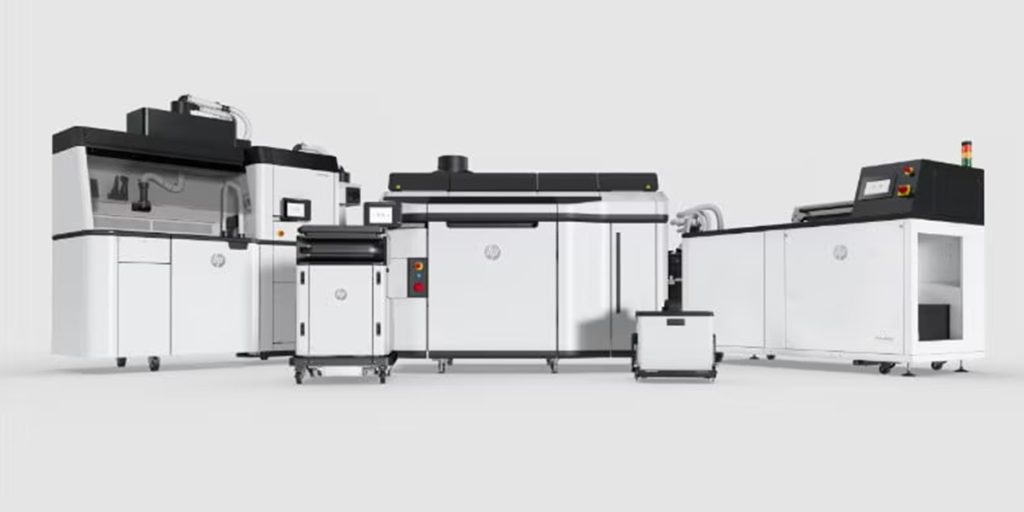
In HP Multi Jet Fusion environments, yield variability is rarely caused by a single issue. More often, it is the result of multiple small factors interacting across the process.
Common contributors include:
- Printer-to-printer variation
- Build-to-build drift over time
- Inconsistent accuracy
- Relying solely on default profiles for production-grade applications
None of these is a deal-breaker on its own. But together, they introduce enough variation to reduce dimensional accuracy and mechanical consistency, especially in high-volume or tolerance-sensitive applications.
The Role of Process Development in Improving Yield
One of the most effective ways to address yield variability is through process development and calibration, not solely through hardware changes.
Process development focuses on controlling the variables that influence part quality at scale. This includes:
- Printer-specific calibration to reduce variability
- Job-level dimensional tuning for critical builds
- Parameter optimization based on real production data
- Standardization across materials, geometries, and applications
Independent testing has shown that pairing HP Jet Fusion systems with process development can significantly improve dimensional consistency, mechanical repeatability, and overall yield across multiple application types.
What Yield Improvements Look Like in Real Production
Yield gains are not abstract. They show up in measurable ways on the factory floor. Across automotive, industrial, and transportation applications, improved process control has been associated with:
- Meaningful reductions in dimensional variability
- More consistent mechanical properties across builds
- Higher average dimensional yield
- Fewer reprints and less manual intervention
In some cases, manufacturers have achieved total cost savings of up to 40 percent, driven primarily by improved yield and repeatability rather than raw speed increases. The key takeaway is simple: better yield means fewer surprises and fewer surprises mean lower cost.
Why This Matters More as You Scale
Early additive programs can tolerate variability. Low volumes allow teams to inspect, sort, and rework parts without significant disruption. That flexibility disappears as production scales. When additive manufacturing moves into serial production, variability becomes a bottleneck, manual inspection increases, and planning becomes reactive instead of proactive.
At that stage, improving yield is no longer optional, it’s foundational to scaling profitably.
Yield as a Strategic Advantage, Not Just a Metric
Manufacturers who prioritize yield gain more than just cost savings, they gain confidence.
Confidence to:
- Commit to tighter tolerances
- Expand additive into production-critical applications
- Reduce safety margins that inflate part cost
- Offer consistent quality across customers and programs
Yield turns additive manufacturing from a flexible tool into a reliable production platform.
Going Deeper: Data-Backed Insights on Cost and Yield
For teams looking to explore this topic in more detail, including application-specific results and quantitative data, we’ve compiled a full white paper that provides a deeper technical breakdown of how yield improvements translate directly into additive manufacturing cost reduction.
You can read the full white paper: How to Reduce Cost by Increasing Yield.
Final Thoughts
Reducing costs in additive manufacturing does not always require faster machines or cheaper materials. Often, it starts with making every build count. By focusing on yield, manufacturers unlock a more stable, predictable, and scalable production model, one where efficiency and quality reinforce each other instead of competing.
And that is where additive manufacturing delivers its most significant value.
Ready to Apply This to Your Production Environment?
If you are evaluating ways to reduce costs, improve yield, or scale polymer additive manufacturing with confidence, our team at ABCorp 3D can help assess where development and optimization may have the greatest impact.